Whether you’re working from home full-time, running your own business, attending online classes, or just need a focused space for personal projects, a well-designed home office can make all the difference. The right setup can enhance your productivity, minimize distractions, and even improve your physical well-being.
But building the perfect home workspace doesn’t require a complete overhaul. With a few smart, intentional choices, you can transform even the smallest nook into a stylish and functional environment.
Here are 10 essential tips to help you design a home office that truly works for you.
- Choose a Comfortable, Supportive Chair
Your chair is arguably the most important piece of your home office setup. Since you’ll be spending several hours a day sitting, comfort and support are crucial—not just for productivity, but for long-term health.
- Ergonomics first: Look for a chair with lumbar support, adjustable height, armrests, and a well-cushioned seat. This helps reduce back strain and fatigue.
- Try before you buy: If possible, test chairs in person. Everyone’s posture and body are different—what works for one person might not work for another.
- Add accessories: A footrest, lumbar pillow, or seat cushion can enhance comfort and posture.
Investing in a good chair now can save you from discomfort, injuries, and medical bills later.
- Use a Functional Desk That Matches Your Workflow
Your desk is the central hub of your office. The type of desk you choose should suit your daily tasks and reflect your personal style and space availability.
- Minimalist desks: Ideal for laptop work, writing, or drawing. Choose one with a clean, open surface if you value simplicity and visual clarity.
- Desks with storage: If you deal with papers, tools, or multiple devices, drawers or built-in shelving can keep everything tidy and accessible.
- Standing desks: Adjustable-height desks allow you to switch between sitting and standing—great for improving energy and posture.
- Corner or wall-mounted desks: Perfect for small spaces or shared areas, making the most of every inch.
Make sure your desk height is aligned with your chair and screen for ergonomic comfort.
- Add Task Lighting to Reduce Eye Strain and Set the Mood
Lighting affects everything from focus to mood. Natural light is ideal, but well-placed artificial lighting can make a huge difference, especially for long work hours or late-night sessions.
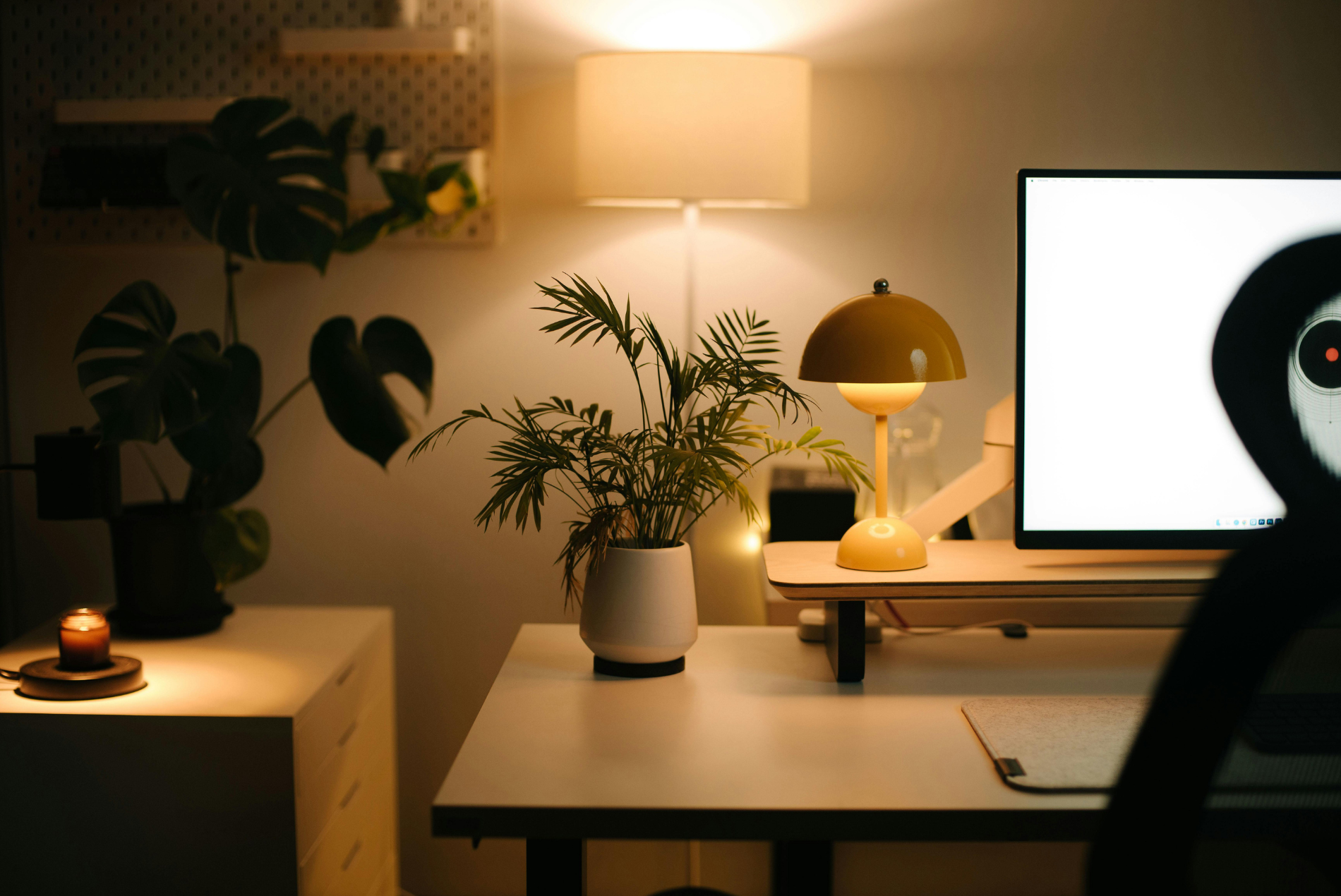
- Desk lamps: Adjustable lamps with focused beams help reduce glare and shadows while working.
- Warm vs. cool lighting: Warm light is calming, while cooler light is better for alertness and visibility. Choose based on your tasks and time of day.
- Wall-mounted sconces or clip lights: These save desk space and can be positioned exactly where you need them.
Avoid relying solely on overhead lighting—layered lighting gives you more control and ambiance.
- Personalize the Space to Keep Yourself Motivated
A home office doesn’t need to be sterile or corporate. Personal touches make it feel like your space and can help reduce stress while boosting creativity.
- Photos and quotes: Frame a favorite photo of loved ones, a meaningful trip, or a quote that inspires you.
- Decor items: Choose small decor pieces that reflect your style—like a decorative clock, figurine, or stylish pen holder.
- Color psychology: Incorporate colors that enhance focus (like blue or green) or spark creativity (like yellow or orange).
Don’t be afraid to let your personality shine. When you enjoy your surroundings, you’re more likely to enjoy your work.
- Incorporate Greenery to Refresh the Environment
Plants are more than just decoration—they improve air quality, reduce stress, and enhance your connection to nature, which can increase mental clarity and happiness.
- Best desk plants: Try easy-to-maintain plants like snake plants, pothos, peace lilies, succulents, or ZZ plants.
- Hanging planters or shelf greenery: Perfect for small desks—adds life without taking up work surface.
- Planter aesthetics: Match the pot or planter style to your decor theme (ceramic for modern, wood for rustic, metal for industrial).
Even a single small plant can brighten your mood and boost productivity.
- Keep Cords and Tech Clutter Organized
Cables, chargers, and wires can quickly turn a clean space into a chaotic one. Managing this tech clutter makes your space safer, tidier, and more efficient.
- Cable organizers: Use clips, sleeves, or trays to keep cords grouped and out of sight.
- Wireless accessories: Consider a wireless mouse, keyboard, or headset to reduce cords entirely.
- Charging station: Create a designated space to charge devices neatly using a USB hub or dock.
A cleaner workspace promotes a clearer mind and helps you stay focused.
- Add Soundproofing for a Quieter, More Focused Space
Noise is one of the biggest productivity killers in a home office—especially if you live in a busy household or near a noisy street.
- Rugs and curtains: Thick area rugs and heavy curtains can absorb sound and reduce echo.
- Acoustic panels: Decorative panels or foam tiles help dampen noise, especially in rooms with hard flooring.
- White noise machines: If you can’t block noise, mask it. Soothing background sounds can help you concentrate better.
Reducing noise distractions makes it easier to stay in flow and finish tasks efficiently.
- Maximize Vertical Space with Smart Wall Storage
If you’re working in a small room or sharing space, vertical storage is a game-changer. It keeps your desk free from clutter while making essentials easy to reach.
- Wall-mounted shelves: Use them to store books, files, or decor items.
- Pegboards or corkboards: Organize notes, tools, or inspiration images with hooks and pins.
- Magnetic boards or hanging organizers: Perfect for notes, calendars, or frequently used items.
Your walls are valuable real estate—make them work for you.
- Designate Zones for Different Tasks and Energy Levels
If you use your home office for multiple activities—like meetings, writing, brainstorming, or reading—creating functional zones can help you mentally shift gears throughout the day.
- Main work zone: Your desk area with your computer, supplies, and lighting.
- Idea zone: A whiteboard, chalkboard, or notebook for brainstorming and creative thinking.
- Break zone: A comfy chair, bean bag, or window spot where you can take short breaks or relax with a book or tea.
Even in small rooms, using furniture or rugs to visually separate areas can make your space feel more organized and purposeful.
- Keep It Clutter-Free with Regular Maintenance
A clean and organized workspace supports focus, clarity, and mental well-being. Clutter, on the other hand, creates distractions and stress.
- Daily tidy-up: Take five minutes at the end of the day to put away papers, file documents, and straighten your desk.
- Use organizers: Drawer dividers, desktop trays, and file folders keep everything in place.
- Digital declutter: Don’t forget to keep your computer desktop, email, and files organized too.
Making cleanliness a habit ensures your workspace remains a place of calm and productivity.
Final Thoughts: Make Your Home Office Work for You
Your home office should be more than just a functional corner—it should be a space that inspires you, supports your workflow, and reflects who you are. Whether you’re working from a full-sized room or a cozy nook in the living room, these simple yet powerful upgrades can help you build a productive, stylish, and energizing environment.
The best part? You don’t have to spend a fortune or overhaul your entire setup. A few intentional changes—like better lighting, a more comfortable chair, or adding plants—can make all the difference in how you feel and perform during the workday.